Swallowed in the sea


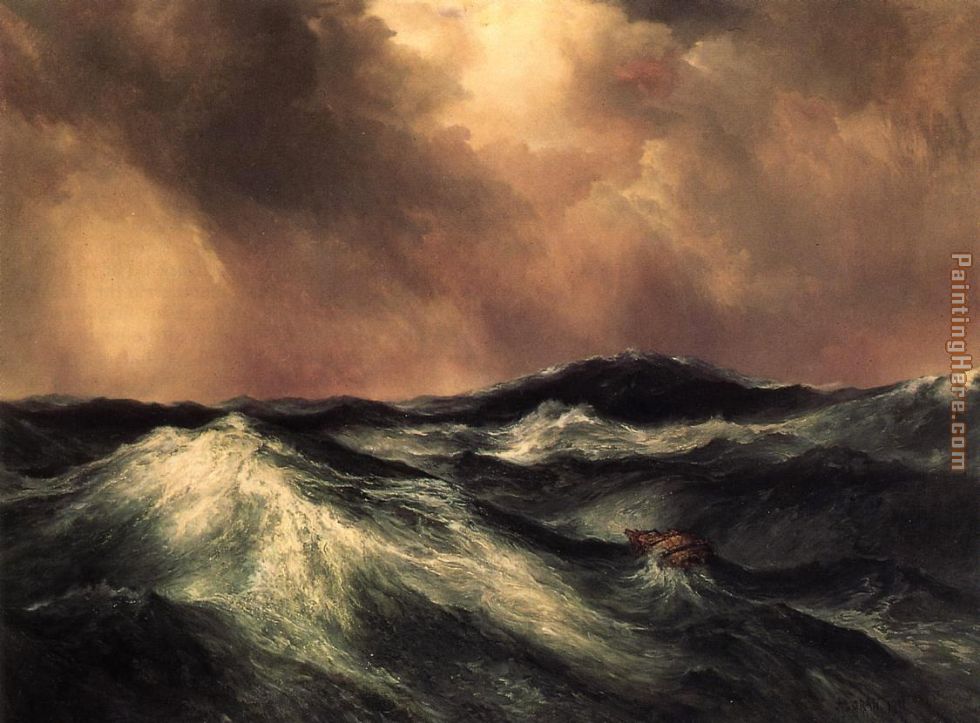
The Angry Sea

A  tumultuous sea. This can be a definition for life. It starts abruptly, like a sudden typhoon. It can suddenly soften as a warm towel against your skin. Life can sometimes be as intimate like a chaste kiss or as hard as fifty kilos on your back. Life, as it seems, is a roller coaster. We must brave the waters, and mind the hatches. In life we must try to “pass the storm”, and try not to drown. But, what happens in that moment when we start to “drown”? Everything and anything turns overwhelming. “This is where you show your true strength” people usually say to each other. “You’ll be stronger after this passes.” they tell you as advice. How do they know if they may not be living (or have lived) the situation, or a similar version of it.

So what can we do? Do we get swallowed by the sea? Do we “brave the storm”? Do we “the storm pass”? Because the reality of most situations is that during the situation, we can’t do anything. We can do something “after” the storm. I believe it’s “after the storm” and the actions that we take during that time is what shows who we are. It’s ok to do nothing. It is acceptable to cry. It is human to do nothing. At least, for a while. But, after the slump, we must take back what is ours. We must yell at the storm, at life itself, scream to the heavens that we can overcome whatever it is that we face. Show life that we can get stronger.

“If you allow yourself, you can become stronger in the very places you were broken” – Jane Fonda

The reality of life is that we are always going to get hurt. We are always going to get broken. The majority of this comes from the people we trust, care, and love the most. What can we do? The only thing I can tell you is what I read a couple of days ago:

One may tolerate a world of demons for the sake of an angel- Madame de Pompadour

And if that angel is the one we humans call “soulmate”, well we can weather any storm. Why? Because they make you stronger than ever before.


How to achieve a state of mindfulness & relaxation when you’re a musician.


Let’s face it, if you’re a musician you may be in a constant state of stress. This may be because of too many rehearsals, deadlines, concerts, too many scores to learn, and or teach. Sometimes we even have to bring our work home! To everything that may be happening in our professional lives, we have to add this to the stress we may encounter in our personal lives. So what can we do to relax and achieve a state of mindfulness? First of all we must properly define those two terms.

  • Relaxation (noun): the state of being free of tension and anxiety.
  • Mindfulness (noun): inclined to be aware
  • Aware (adj): having or showing realization, perception, or knowledge

If we were “normal people” (and I use this term for non-musician or artsy people) we would do what “normal people” do when they want to be stress-free, turn up their music and drown the world. Now, I’m not saying that this works, because sometimes it does but this may be counter-productive. Why? Because as musician’s a chord progression, motif in a song or a bands name may remind us about all our stress from our work.

How to achieve mindfulness

In zen, the way to approach mindfulness is by breathing and in quietness. So what we must do is to stop, before or after a rehearsal or project and do the following

  1. Find the silence

    As musicians we know what the power of silence can do. It can create tension or release, it prepares for a new theme, in short, silence is good. If you’re like me I over think things (a lot) and these random (and not so random) thoughts can hurt us more than they should. We have to stop, and “look” or distance ourselves from our thoughts.

  2. Balance

           We must achieve a balance between our personal and professional lives. We have to start asking ourselves: am I biting more than I can chew? Do I have too many projects running at once? What are the pros and cons of each project? What is the priority right now? Remember to do this objectively and distant. As you were an observer of your own life, instead of actually living it. To achieve body balance also helps. I remember my choral conducting courses and Prof. Ruben Colon always told us that as a conductor you must align your body so that you feel no tension anywhere. To achieve this I always think of being as relaxed as a rag doll and slowly widening and stretch my back.

  3. Breathe my child! Breathe!

           I’m an asthmatic. I am also a singer. When I get in stressful situations I feel like I’m about to drown! When I feel like this I always curse (inwardly, of course) and ask “Where the hell (or other nouns) is my inhaler?!” Then, just when I’m about to drown I listen to that annoying little voice in my head, and he screams BREATHE MY CHILD! BREATHE! Allow yourself to breathe! I’ve noticed that if you’re a musician, even know that we KNOW the importance of breathing, when we’re not what I like to call “musician mode” in a magical way we forget that we have to take deep breaths. We have to permit ourselves to breathe and connect our body, mind, and soul.

  4. Accept what we can and can’t change.

    In this year where I have  called “The year that Never was”, where I made plans and every single one of them failed, I realized that I have to learn to accept things, life and it’s difficulties. I have to learn to accept what we can and can’t change professionally as well as in my personal life. I had to acknowledge my failures as well as triumphs, the sorrow, pain, sadness, happiness. We must put (want to or not) some things past us so that we can grow.

  5. Accept resistance

    You may want to kill him/her because they don’t do their job. You may want to think of all the negative aspects of your life and the dreadful “What if?” All of this may happen but life is full of resistance. We must always try to make a conscious choice as well as try to maintain that distance between thoughts, especially when you’re going to make important choices in your life.
  6. Hobbies

    We must, must, must, MUST find a hobby that is non-music related. In this year this has “evolved” in devouring series such as Doctor Who, Survivor, Merlin, Sherlock, and many, many more. Try to do this with friends. Maybe go out on a walk. A friend of mine started to do 10-mile bicycle runs (a little extreme for me), but find something to do when you’re not in “musician mode” or just want to relax.

The year that never was part deux: “When reality ruins everything”


In the last post I reflected on what has happened in this past year. To recap, the expectations  were:

  1. Finish my Teaching Internship successfully, and show that I can actually be a music teacher (choral conductor).
  2. Finish my Choral Conducting course & (maybe) conduct in the Spring Tour.
  3. Go to France in the summer with my best friend (as a reward to myself for studying nonstop for five years)
  4. Start my Master’s in Music (Choral Conducting).
  5. Become more independent.

As a result, I finished the Teaching Internship successfully, I passed all my evaluations with very high percentage (yay me!) and so did my friend & peer Yolimar. I received one of highest grades in the Internship (at least from my supervisors group). I also finished my Choral Conducting course with flying colors. I am (for now) the only student from PUCPR who graduated with a full year in student conducting (pats self). I also conducted in the Spring Tour (New York & New Jersey). I had the honor of conduct in Saint Patrick’s Cathedral in New York & in Saint Joseph of the Palisades Chapel in New Jersey. I graduated PUCPR with honors, and received the Mons. Di Marco Medal for musicianship and musical excellence. So far so good right? Wrong.

It’s amazing the way life changes drastically in a few moments. I was in an all time high, I was graduating as well did my partner and my better half. We were going to France in the Summer,and then I would start my masters degree. I got accepted into a very recognized School of Music, and I was on the runnings in getting a scholarship. I was going to become more independent. Things were looking up. That’s when everything came crashing down.

In the few months before graduating (more or less May/June 2012) I received the following information:

  1. I did not receive any type of scholarship. Since I didn’t receive any (extra) financial aid, I couldn’t start my masters in the program of my dreams for I couldn’t have managed financially. I could have started my master’s degree last August (August 2012), but that meant taking out Federal and Private loans. But this meant that I would have fallen in the death grip of financial decay at 22 years. I decided to not study (as any rational, decent individual would do). 
  2. I did not go to France for the summer with my best friend. Why? Because the loans (which were “tailored for the trip”) did not cover nearly half of the trips expenses. So no trip for any of us.
  3. Being independent: This, which was intertwined with the last to points, did not come into fruition. I know what you may think. “Jose, you do not need to go to leave your parents house to be independent.” I know this. I know that I do not need to leave my parents house to become independent. The dillema is that, here in Puerto Rico, there are no jobs. When I mean there are no jobs is that I have friend with two Masters degrees and she can’t find a job as a Teacher (her Bachellors), Administrator (one of her master’s degrees) or even in a Fast Food Establishment (because she’s “overqualified”). As I wrote in my Goals Statement essay:

    The Puerto Rican government perceives the arts in general as insignificant in comparison with the core subjects, as well as unnecessary for the integral development of the island’s students. Currently, the Department of Education of Puerto Rico has enacted a policy that authorizes school principals (of both elementary and secondary level schools) to decide whether or not they wish to offer music, visual arts, and even physical education classes to their students based on two criteria: first, if the principals deem the classes necessary to the integral development of their students, and secondly, if the school’s budget allows space for teachers specialized in fine arts and/or physical education.

    So this means that I can’t work as a teacher because in both, private and public, educational system in the island are not hiring teacher, what is a recent college graduate to do? (Other than to send resumes/C.V knowing that you won’t get hired, because there are no jobs).

  4. Social Media Insomnia/Netflix addiction: Since I couldn’t find a job my days these past year became a blur. I have spent hours in social media, such as Facebook, Tumblr, Twitter, Instagram, and Netflix watching T.V series, movies, documentaries and spiraling into what I call “The College Graduate Depression”. This stage is a really sad one, for you realize that you can’t go foward, because you can’t get a job and to get a job you need experience. What’s even sadder is that all of my friends got in this stage together and even more depressing? We couldn’t meet up and didn’t talk much (in person) because to meet up equals gas equals money equals no job equals no money. So this is a vicious and deadly cycle which needs to stop.

In this realization I started to look for methods of escaping. It sounds like a rivating tale of survival (which it is). The plan was the same: “how do I get out of here (the island)?” “how can I at least find a job, save up some money, and go to that first question?” I spent countles hours searching for “the escape”. I searched for other music programs and decided I would apply for Western Illinois University, Westminister Choir College, & re-apply to Florida State University. I got accepted into Western Illinois University’s Master’s in Music Program (Choral Conducting, Performance) as well as Florida State University (again). I also passed the first audition for Westminister Choir College (I still can’t believe it!) but I couldn’t go to their on-campus audition due to lack of money.

So what’s next?

After being accepted into both programs, interviewed by Dr. James Stegall, Director of Choral Activities from Western Illinois University and analyzing my chances in both universities. I decided to go to WIU and start my post-graduate education Illinois. As part of being a graduate student in WIU I will be a Graduate Assistant for Choirs. Since everything will be a brand new experience (leaving the island on my own for the first time, and studying “abroad”) I’ll be blogging regularly and sharing all my experiences in Illinois with you all. I hope you enjoy them as much as I know I will. I hope you enjoy this crazy ride you’re about to take with me. Please remember to have both hands and feet inside the machine at all times!

-J.C.

The year that never was: Reflection of this last year.


It’s May. Unfortunately this means that’s it has been a year since I graduated from the Pontifical Catholic University from Puerto Rico. In this year, which shall be named: “The year that never was.” has been a disaster in my professional life. Let’s review what the plans were:

  1. In January- May 2012 I was doing my “Práctica Docente” this was basically my Teaching Internship in a school in a nearby town, called Adjuntas. There I worked my prove that I had “what it takes” to be a music teacher/choral conductor in a high school.  
  2. In that same time frame I had my “Choral Conducting II: Advanced Conducting” where I had to conduct various (advanced) pieces” that had some sort of accompaniment. It was in this time where I had the opportunity to represent the island when we had our Spring Tour in New York & New Jersey. Some of the places where I conducted was in Saint Paul’s Cathedral in New York & Saint Joseph of the Palisades in New Jersey.
  3. In my last semester as a undergrad student I planned to go to France with my best friend to study French in La Sorbonne. The plan was go to take a student loan and go to France in June and come back mid-July.
  4. After I graduated, I had planned to start in August (2012) a Masters in Music (Performance) in Choral conducting. I had applied, and got accepted to Florida’s State University.
  5. (not really a fifth point but…) Be more independent. This is tightly in relation with the last post. I would be living in another place (with my best friend) and we both would start being independent and start our adult lives.

All of these were the expectations I had for the past year. In the next post I will reflect on what actually happened (aka. reality)

If You’re Busy, You’re Doing Something Wrong: The Surprisingly Relaxed Lives of Elite Achievers


**This is a guest post from Study Hacks** (the Url is in the bottom of the post**


The Berlin Study

In the early 1990s, a trio of psychologists descended on the Universität der Künste, a historic arts academy in the heart of West Berlin. They came to study the violinists.

As described in their subsequent publication in Psychological Review, the researchers asked the academy’s music professors to help them identify a set of stand out violin players — the students who the professors believed would go onto careers as professional performers.

We’ll call this group the elite players.

For a point

of comparison, they also selected a group of students from the school’s education department. These were students who were on track to become music teachers. They were serious about violin, but as their professors explained, their ability was not in the same league as the first group.

We’ll call this group the average players.

The three researchers subjected their subjects to a series of in-depth interviews. They then gave them diaries which divided each 24-hour period into 50 minute chunks, and sent them home to keep a careful log of how they spent their time.

Flush with data, the researchers went to work trying to answer a fundamental question: Why are the elite players better than the average players?

The obvious guess is that the elite players are more dedicated to their craft. That is, they’re willing to put in the long,Tiger Mom-style hours required to get good, while the average players are off goofing around and enjoying life.

The data, as it turns out, had a different story to tell…

Decoding the Patterns of the Elite

We can start by disproving the assumption that the elite players dedicate more hours to music. The time diaries revealed that both groups spent, on average, the same number of hours on music per week (around 50).

The difference was in how they spent this time. The elite players were spending almost three times more hours than the average players on deliberate practice — the uncomfortable, methodical work of stretching your ability.


This might not be surprising, as the importance of deliberate practice had been replicated and reported many times (c.f., Gladwell).

But the researchers weren’t done.

They also studied how the students scheduled their work. The average players, they discovered, spread their work throughout the day. A graph included in the paper, which shows the average time spent working versus the waking hours of the day, is essentially flat.

The elite players, by contrast, consolidated their work into two well-defined periods. When you plot the average time spent working versus the hours of the day for these players, there are two prominent peaks: one in the morning and one in the afternoon.

In fact, the more elite the player, the more pronounced the peaks. For the best of the best — the subset of the elites who the professors thought would go on to play in one of Germany’s two best professional orchestras — there was essentially no deviation from a rigid two-sessions a day schedule.

This isolation of work from leisure had pronounced effects in other areas of the players’ lives.

Consider, for example, sleep: the elite players slept an hour more per night than the average players.

Also consider relaxation. The researchers asked the players to estimate how much time they dedicated each week to leisure activities — an important indicator of their subjective feeling of relaxation. By this metric, the elite players were significantly more relaxed than the average players, and the best of the best were the most relaxed of all.

Hard Work is Different than Hard to Do Work

To summarize these results:

  • The average players are working just as many hours as the elite players (around 50 hours a week spent on music),
  • but they’re not dedicating these hours to the right type of work (spending almost 3 times less hours than the elites on crucial deliberate practice),
  • and furthermore, they spread this work haphazardly throughout the day. So even though they’re not doing more work than the elite players, they end up sleeping less and feeling more stressed. Not to mention that they remain worse at the violin.

I’ve seen this same phenomenon time and again in my study of high achievers. It came up so often in my study of top students, for example, that I even coined a name for it: the paradox of the relaxed Rhodes Scholar.

This study sheds some light on this paradox. It provides empirical evidence that there’s a difference between hard work and hard to do work:

  • Hard work is deliberate practice. It’s not fun while you’re doing it, but you don’t have to do too much of it in any one day (the elite players spent, on average, 3.5 hours per day engaged in deliberate practice, broken into two sessions). It also provides you measurable progress in a skill, which generates a strong sense of contentment and motivation. Therefore, although hard work is hard, it’s not draining and it can fit nicely into a relaxed and enjoyable day.
  • Hard to do work, by contrast, is draining. It has you running around all day in a state of false busyness that leaves you, like the average players from the Berlin study, feeling tired and stressed. It also, as we just learned, has very little to do with real accomplishment.

This analysis leads to an important conclusion. Whether you’re a student or well along in your career, if your goal is to build a remarkable life, then busyness and exhaustion should be your enemy. If you’re chronically stressed and up late working, you’


re doing something wrong. You’re the average players from the Universität der Künste — not the elite. You’ve built a life around hard to do work, not hard work.

The solution suggested by this research, as well as my own, is as simple as it is startling: Do less. But do what you do with complete and hard focus. Then when you’re done be done, and go enjoy the rest of the day.

(Photo by RKHawaii)

**This is a guest post from  http://calnewport.com/blog/2011/11/11/if-youre-busy-youre-doing-something-wrong-the-surprisingly-relaxed-lives-of-elite-achievers/

Slowly dies…


Scanning through last year’s paper
Moments pass
Moments will renew
As the clock dies slowly consumed by fire.

Around the table we go
Back and forth as the wind goes
I sit in disbelief to this day
That what happened came true
This is only a memory
That will soon pass too
As the clock dies slowly consumed by fire

Melodies arise from the silent pages
Moments that passed
Moments will come
Closing my eyes, as the currents embrace my soul
As the clock regrets stopping for the moment…

It happened,
It passed,
Here I lie in denial
Every tear is a waterfall
Ever fear a grain of sand
Listen to the emotion’s lament and turmoil
Just sitting here, waiting for the moment to pass
As the clock slowly dies consumed by tears

José Clavell Acosta
2011®

The pursuit of Happiness


Monday…
You have to wake up sooner if not you’re gonna miss your classes.
Get my coffee and try to survive another day
Sit down on a chair and speak of God
Run a marathon: “Don’t walk so much ‘cause you’ll get sick”
No te mojes porque te da asma
Llévate la sombrilla porque va a llover
Even if you study music, do something that makes money.
Ni-i-i-i-a-a-a-a-a-a-a
You have to do something in your life that makes you happy
Go on and sit and listen to a professor talk some more
Remember you have to get good grades if not you’re not going to get a job.
Ni-e-a-o-u-u-u-u-u
Cuidado con los tresillos, que los quieren cuadrar!!
Why do you want to study abroad for Choral Conducting when you can do that here without a Master’s?
Molto legato e cantabile
“Dale no querías ser director coral! Dale que Rubén dijo que tu ibas a dirigir”
It’s your last semester make it count!
No bajes el promedio pero no te exigo que seas estudiante de A!
Did you get your grades for the tests?!
Just try to be happy with what you do…
Just trying to pursue my happiness…

By: José A. Clavell Acosta®

1.Vocalizing Exercise
2.Sing the notes as they were one & as if it were a song.

Cynicism is Easy, Optimism Takes Guts


This is a Guest Post from http://www.scotthyoung.com/


Just about every way you can measure, the world is a better place today than it was before. Life expectancy is up, poverty down, even most environmental indicators aside from greenhouse gases have improved.
Yet this is never the story. The story is always how the world, despite the nearly consistent progress over the last millennia, will deteriorate in our lifetimes.
Why Is Pessimism Fashionable?


My hypothesis is that pessimism is the safe, easy stance for most beliefs. If you are optimistic, and wrong, you’re a fool. If you foresee doom that never occurs, nobody bothers to correct your errors.
It’s easier to see why pessimism is fashionable, if you think in terms of game theory. The pessimist, if wrong, suffers little public humiliation. He may even be praised for alerting society to possible danger. The optimist is a fool when wrong and receives little praise for correct predictions.
Given these uneven outcomes, it benefits people to appear overly pessimistic. After all, better to seem overly cautious than to be later made a fool.
The Danger in Pessimism


The problem is that pessimism isn’t without costs. Being overly cautious about some risks exposes us to other dangers. This was the case in Africa, where hysteria over GMO foods resulted in more people starving.
The safest thinking is the most rational thinking. Optimism can be dangerous, but so can pessimism—in causing us to choose “safe” options, which cause more problems than uncertain choices.
Riskless, Cynical Attitude
There’s a parallel between pessimism, believing bad things will happen, and cynicism, or general distrust and jadedness. Once again, there’s a lop-sided risk to the publicly stating your beliefs.
Being enthusiastic about a goal or project is risky. If your goal fails, or your hopes dashed, you are naïve and foolish. Before I started this venture, I tried making a computer game (and failed) in high-school. People around me still like to joke about how precocious and naïve that was.
But whether I had the skills or ability to become a computer games developer is beside the point. This business required 5 years of unsupported enthusiasm before it became successful. The same cynics don’t take back their original skepticism, they just pretend they knew it would have worked all along.
Shut Up and Do The Math
The solution isn’t to always be optimistic and never look for the possible downside. Just because you can believe it, doesn’t mean you can achieve it and phony systems like the Law of Attraction are completely divorced from reality.
Unwarranted enthusiasm and optimism have dangers. But so do pessimism and cynicism. The ideal is to be rational about the future, not to be knowingly biased in one direction.
I can already imagine the objections. “Knowledge is impossible!” you say, “we can never escape bias or make accurate decisions.” This is complete garbage. Yes, perfect rationality is impossible, but that doesn’t mean you can’t make a realistic assessment.
Let’s say you’re starting a new business venture. You could follow societal cynicism and say that 80% of businesses fail. Or you could follow self-help charlatan’s optimism and believe that faith and persistence alone will make you a success.OR—you could do some research. You could figure out what the path to success typically requires. You could calculate what the start-up costs would be, and see if there is any way you can make small calculated experiments to gain more knowledge of future success. At the very least, you could determine the worst-case scenarios in both decisions and try to minimize potential future regret.

Yes—the future is unknowable. No—predictions will never account for all uncertainties. But this doesn’t mean that cynicism is the default rational choice, simply because you’ll never look foolish.
The Guts to Be Optimistic
Sometimes the math does make cynicism the best guess. I think people getting mortgages they can barely afford for investment properties are idiots. The math doesn’t support their enthusiasm.
But in other cases, the math makes enthusiasm a better choice. When I first started this business, the chance of success was probably low. However the worst case wasn’t bad at all. At the very least, I’d learn something and maybe become a better writer. In the best case, I have a career as a writer. Even if success is unlikely, that’s a gamble I’d like to take.
If your goal is to never look foolish or naïve, cynicism is a good strategy. If you’d rather have an awesome life, shut up, do the math, and ignore the dire


Go to http://www.scotthyoung.com/ for more articles devoted on How to get more from life. 

Life is hard… but in the long run… it’s worth it.


“Yes… Life it’s what we call the time from your birth to your death. Yes; life….it’s not easy, it’s not perfect, it’s full of ups & downs. Yes, people will come and go, you will share your heart with the right and wrong people, leaving you into a emotional mess. Life… it’s tough. You may work all your life… or be a lazy mess in your bed and suck up the money from your parents/loved ones. Life it’s full of choices… All of this may be true… we die and we vanish… The world flips a page.. the page of “me”. But! If that page, that life, the actions, the conversations, those “quotes”… everything that we do… IF THAT is EXCEPTIONAL that page will be ripped out of the Encyclopedia called HUMANITY and your life will be placed among all of the other exceptional people who have lived. Some call them Saints, Geniuses, the “brightest” men/women from their age… isn’t that what we truly want inside… to be among these people and be… important, useful?… If you want this… I say to you. Make every second, day, conversation, action count. Inspire to be inspired. Live to be lived. Love to be loved. And maybe… you can be all that you can be.” José Clavell ® 2011

Rain


As the rain falls
I fear of the future
And the uncertainty that it holds….

As the rain falls
Sitting on the wet grass…
Embracing the cold and feel the wind pass
I bow my head
For my thoughts are heavy
Thinking of us and what will the future hold

As the rain falls
The wind sings
The birds chirp
The flowers grow
Cold ensues
Uncertainty shadows my spirit
The sun hides
And life stops….

Dreaming…
As we always do

Hoping
As some of us do

Doubt
Fills
As it does to all

Silence ensues as the sun shines…
Maybe I will get there
If I try hard enough…