To enter or not to enter?


Ok. So here’s the thing. There’s a competition for the American Choral Conductors Asociation called “Raymond W. Brock Memorial Student Composition Contest” here are the guidelines for said competition.

The Raymond W. Brock Memorial Commission

The Raymond W. Brock Memorial Choral Series was established in 1991 to honor the life and contributions of Raymond W. Brock, who served as Administrative Assistant for ACDA from 1987 until his untimely death in 1991.Brock

Annually, the ACDA Executive Committee will commission a recognized composer to write a choral composition in an effort to perpetuate quality choral repertoire. Funds for this commission will be paid from the Raymond W. Brock Memorial Endowment, a fund established and maintained by the membership of ACDA.

Guidelines for commissioned compositions:

1. Compositions that have a sacred text are preferred, however it is not required that the text come from the Bible.
2. Compositions that use voices are preferred.
3. The music must be substantial and accessible.
4. The music must be of a kind and quality that will live and last for a long period of time.
5. All commissioned compositions will be performed publicly for the first time at a National or Division Conference of the American Choral Directors Association.

Raymond W. Brock Student Composition Competition

In an effort to find another means for furthering its mission to promote choral music and ensure its future, ACDA established the Raymond W. Brock Memorial Student Composition Contest in 1998.  The objectives of the contest are three-fold:

1. To acknowledge and reward outstanding undergraduate and graduate student composers,
2. To encourage choral composition of the highest caliber, and
3. To further promote student activity at ACDA division and national conventions.

The winner of the composition contest will be awarded a $1,000 cash prize, airfare to the ACDA convention, hotel accommodations, convention registration, and a performance of the work on the main stage by a choral ensemble selected by the Convention Committee.

Applications are typically made available in March of each year in Choral Journal and on ACDA’s website.

So. After reading all of this I don’t know if I should enter the competition or not. I feel as if I’m not a good composer or that my music isn’t good enough for that level. What advice would you give me? Should I?
Murmure dans le vent


Bloggers Note:

This will be a first in four posts based on Tchaikovsky’s Serenade for Strings in C major Op.48. This piece composed by Peter Ilich Tchaikovsky in 1880 has four movements. If you are not familiar with this I’ll explain it very simply!

When a composer, well composes, he/she thinks just like an author thinks in writing a novel. “Serenade for Strings” is the title of the “novel”, but the “novel” has various chapters. In classical music, each “chapter” (aka. movements) will have a title. The text, for example I have a project where the “main title” is “You and I” and a movement (chapter) is “My heart is not ready to take off”. In classical music, if somebody’s work has a title like in the examples above we classify said work as programmatic music. Programmatic music is a piece of art whose title alludes to something else.

Tchaikovsky’s “Serenade for Strings” has 4 movements:

  1. Pezzo in forma di sonatina: Andante non troppo — Allegro moderato
  2. Valse: Moderato — Tempo di valse
  3. Élégie: Larghetto elegiaco
  4. Finale (Tema Russo): Andante con spirito

In this case, Tchaikovsky used tempo marking (which gives the orchestra, in this case, how they should play the score). Tempo markings are usually in Italian, but they can be in French, English, German or Russian.

I hope you enjoy this mini-series!

Continue reading “Murmure dans le vent”

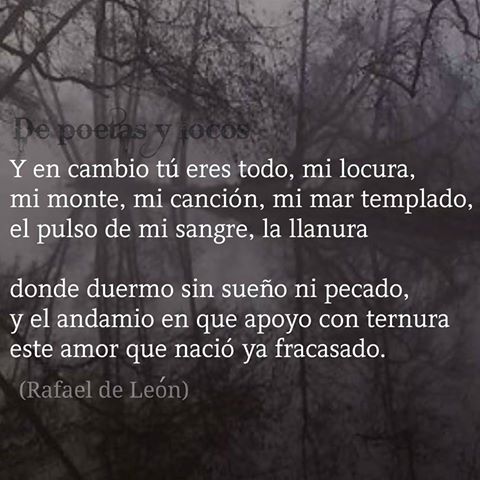
From poets and crazy people


And in exchange you are my everything, my love, my mountain, my song, my tempered sea, the pulse in my blood, my prairie.Where I sleep without sleep nor sin, and the scaffolding in which I support this love with tenure. This love that was born already in failure.

-Rafael de Leon

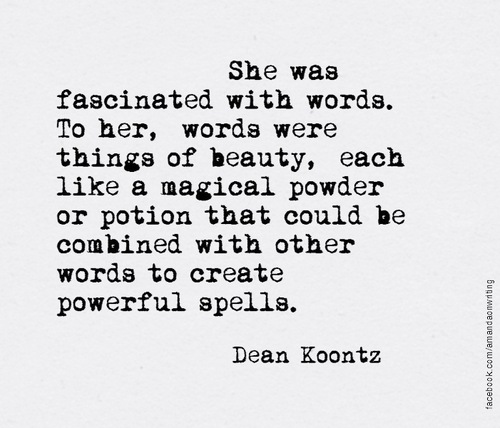
Fascination with words


Fascination with words

Words


Words have power. Words can convey emotions and passion… Words can save or kill. Words can bewitch, hurt, and steal. Musicians and writers are “gods” don’t you see? They can play with you (and you volunteer). Alter your reality, state of mind, and emotions we will. Until we accept the concept of life in which we live.

Shine with me


I am the moon shining your path
I am your blanket filled with stars
I am the pillow in which you sob
I am the warmth hugging your arms

I smile and smile again
Against your skin, your breath (and yes)
I forever will be
Waiting for you (you’ll see!)
I’ll breathe under your skin
“Just as the moon who feigns it’s free you are the tide who shines with me”

20130630-234301.jpg